 By usatoday crossword
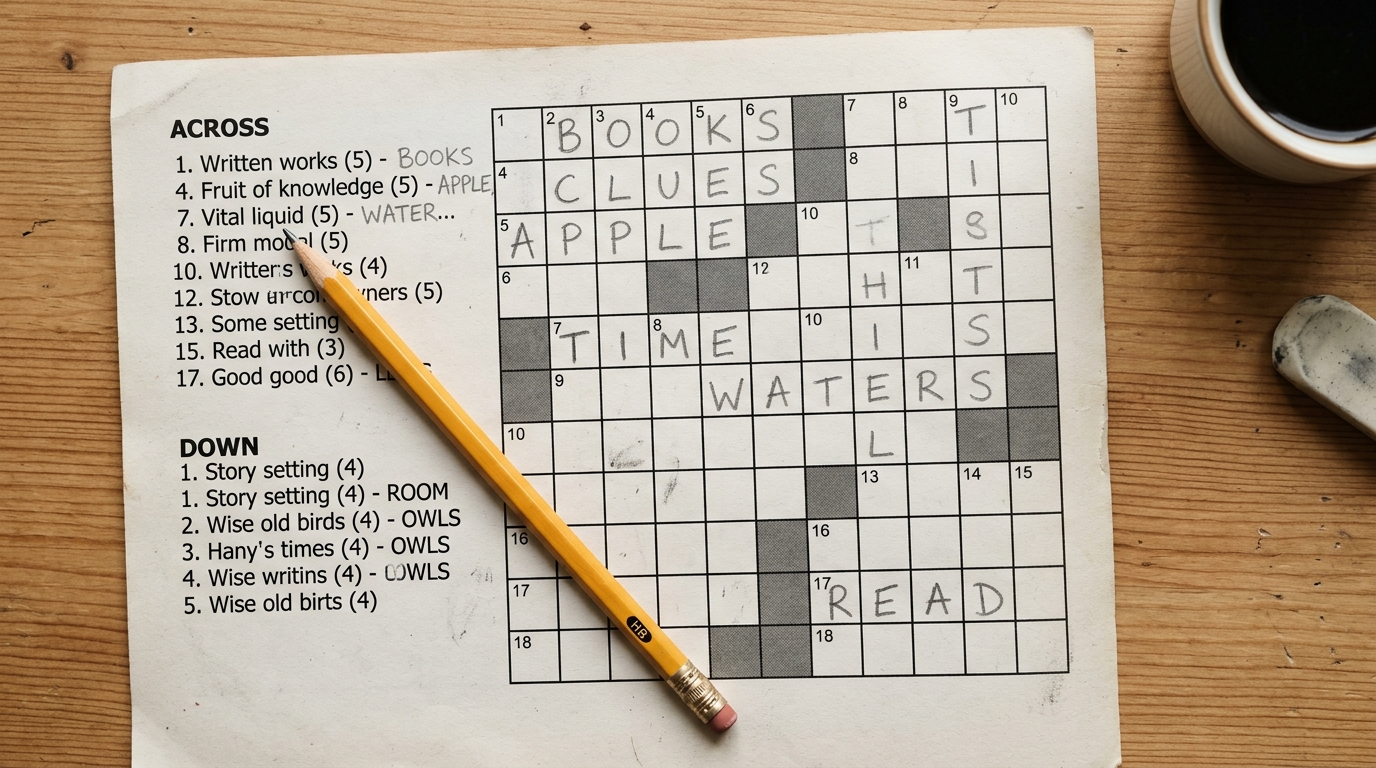
A clue can suggest ten possible answers until the grid tells you there are only five squares. That small count is not a detail. It is the first boundary around the question. Crossword answer length gives that moment a name, but the useful part is the habit behind it. The aim is not to make every move look clever. It is to make the next move easier to explain.
Why Crossword answer length matters on an ordinary puzzle
Crossword answer length works with clue grammar and crossing letters. A five-letter plural needs a different ending from a five-letter verb, and a phrase may be entered differently depending on the puzzle’s conventions. Length does not solve the clue, but it removes many attractive wrong answers. A player does not need a special setup to use this idea. It works during a short browser session, on a printed page, or in the middle of a game when attention is starting to drift.
Crossword solving also improves when you separate evidence from enthusiasm. A familiar phrase can be useful, but it is still only a candidate until its length, grammar, and crossings agree. The grid gives you several kinds of proof, and they do not all carry the same weight. A single remembered name may be shaky; a clean definition plus two independent letters is stronger. This is why experienced solvers leave a blank without embarrassment. They are saving the grid from a guess that would make the next clues harder.
The wider background is worth keeping nearby. Smithsonian crossword history offers useful context for this puzzle family, while Britannica crossword puzzle overview gives a second view of its rules or history. The sources differ in purpose, but both support the same practical lesson: a clear structure gives the player something reliable to inspect.
How to use Crossword answer length without forcing it
Count the entry before trying to remember a word. Say the clue aloud with that length in mind, then check tense, number, and part of speech. If two words still fit, wait for a crossing rather than choosing the one you happen to know first. Start with a legal move and let the evidence narrow the field. If the position does not improve, stop. A good technique is a filter, not a command to keep pushing the same idea after the board has moved on.
A short routine for the next game
Use length, grammar, crossing. Write the pattern, state the clue’s requested form, and hold the answer lightly until another letter confirms it. This routine is especially useful on short daily grids where one wrong letter touches several clues.
- Count the squares accurately.
- Check tense, number, and part of speech.
- Write a pattern instead of a full guess.
- Wait for a crossing when two answers remain.
The mistake that makes this idea feel harder
The trap is counting an entry incorrectly when a clue contains a phrase or abbreviation. Another mistake is using length to force an answer whose grammar is wrong. The blank count is a filter, not a substitute for reading.
What to remember when the board changes
Crossword answer length turns a vague clue into a smaller question. You do not need a larger vocabulary for every blank. You need to respect the limits the grid has already given you. That is also why Crossword answer length should stay practical. Use it when it describes the board in front of you, then return to ordinary reading when the evidence changes. A puzzle is allowed to ask a different question on the next move.
If Crossword answer length does not produce a move today, that is useful information too. Leave the position clean, keep the strongest clue visible, and come back after one ordinary move. Techniques become reliable through that small return: notice the signal, test it, record what changed, and stop before the idea turns into a guess. Over time, the pause becomes part of your solving rhythm rather than a sign that the puzzle has defeated you.
Keep the session concrete. Name the clue, make one reversible change, and look again. That is enough for a useful practice round, even when the puzzle is unfinished. A short note about what changed makes the next session easier to start.
For a live session, play more puzzles on usatoday-crossword.com. When you want a related example, browse related posts on this site. You can also try another daily puzzle at Easy Daily Puzzle or find more puzzle guides on Easy Daily Puzzle. Keep the next step simple: play one puzzle, try the routine once, and notice which decision became clearer.
A crossword does not need a perfect first pass. Leave the uncertain clue clean, keep the confirmed crossings in place, and let the next return happen with better evidence. That is a solving habit, not a concession.