 By usatoday crossword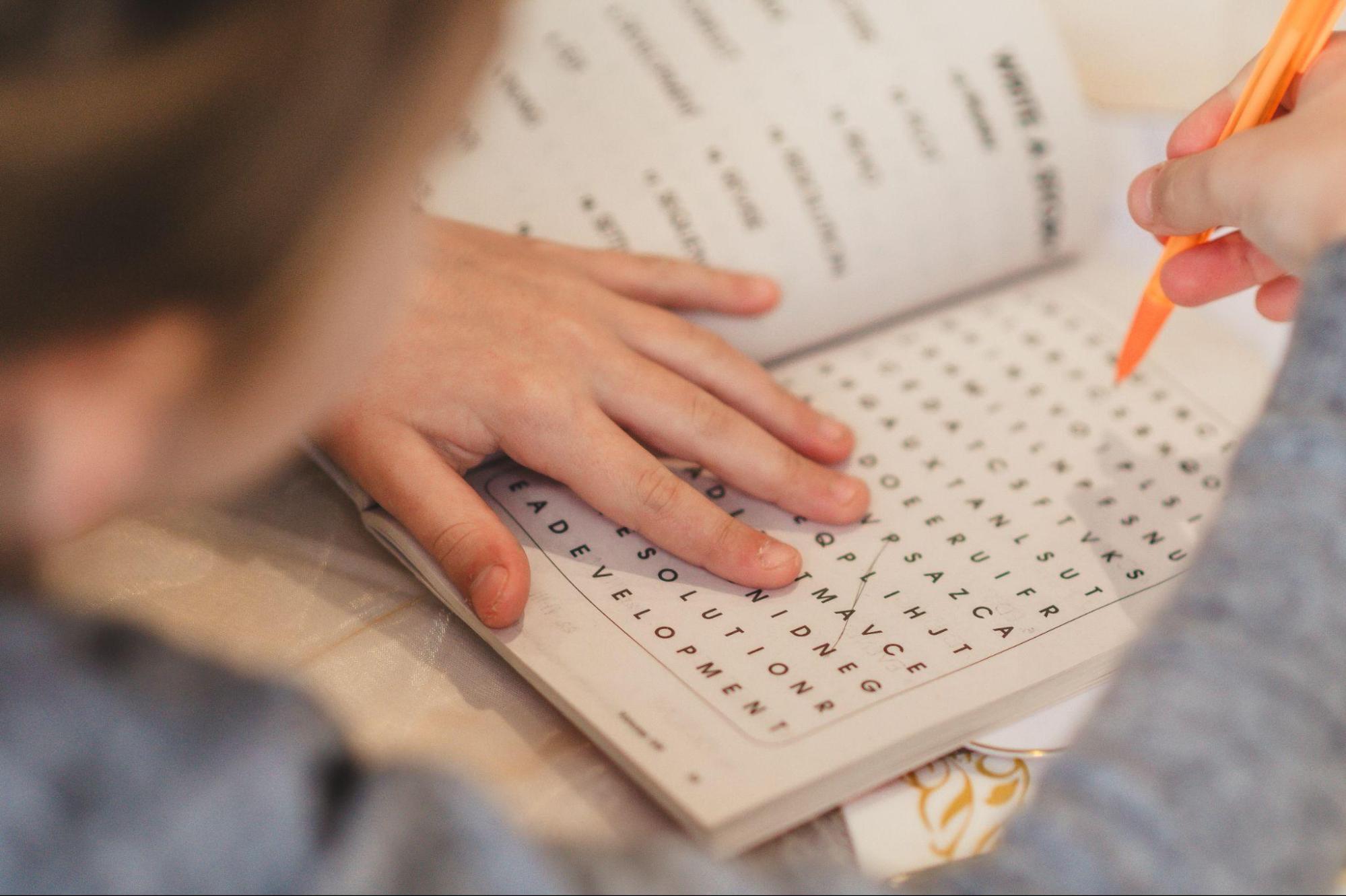

Did you know that looking for words is not just an interesting way to kill time?
In fact, many studies show that they can be instrumental in raising your cognitive ability by improving your memory and ability to recognize patterns. It is not surprising, therefore, that they are used not only in the educational framework but also in medical facilities or high – level centers!
Perhaps this is why millions of people around the world challenge themselves by searching daily or even weekly. This article will take a closer look at ways to find words that can motivate or enhance adult and child awareness – perhaps encouraging you to start to finish searching for words every day while doing so.
Keep Reading to Learn More!
How do we search words for increased cognitive abilities?
There are many ways to complete the search for words that can help you improve your cognitive ability. Examples:
- The screen has been closedName
- The screen has been closedName
- Look for words that improve our mental health
- Search words to improve short-term memory
- Finding words brings you a challenge.
However, the above list does not mean to be too tired, and there are many other benefits associated with completing the search for words.
Finding words improves our skill of recognizing our example.
Regular search for words can improve pattern identification skills.
Psychologists are widely considered to be “very important in most human decision-making jobs, the pattern recognition skills used in various areas of our lives (outside the world of the puzzle). For example, we apply this reasoning and reasoning when communicating with others and when completing basic daily tasks such as driving.
The pattern identification is an extremely useful skill that children can grasp, especially when they start attending school. After all, this will help them to begin applying knowledge almost in the classroom and even helping them learn to read and write! However, the search for words can help children and their perceptive powers will be further explored in this article.
Finding words improves our language skills.
Finding words can also sharpen our perceptive powers by improving language skills. For example, when we completed our search for words, we expanded our vocabulary every time we met a word we were not used to. This can also be helpful in improving our spelling, especially if this is something we often struggle with. After all, taking the time to search for words will help you to become familiar with the correct spelling, reducing your chances of making the next mistake.
Similarly, the search for words can also be a very useful resource for those who are trying to learn a second language. It’s because it gives you fun and fun intellectually to recognize the new charity, as opposed to simply writing down everything and hoping it will hold on to your mind. For this reason, those who strive to learn a second or third language should play as many language-based games as possible to strengthen their knowledge and understanding of new words and phrases. Happily, these resources are easy to find online, whether you are learning English or Spanish.
Finding words improves our mental happiness.
The riddles, such as the search for words, have been associated with improving mental health among participants, especially in avoiding stress and anxiety. Since these problems can have “deep effects on cognitive processes, such as working in memory, searching for the word“ working ” can help restore normal brain function. They can also ensure that you will find more peace in your daily life, a benefit you cannot ignore. For example, this means that you will sleep better at night, a habit often associated with improving cognitive functions.
Furthermore, the joy involved in completing a puzzle or looking for words can increase the capacity to produce good sensory hormones of our brain, such as fat and dopamine – both can improve cognitive function by raising our concentration and energy levels. Hence, those who seek higher awareness after a bad day can benefit from completing their search for words.
The Search for words improves the short-liter memory.
The complete search for words can enhance cognitive ability by improving your short-term memory. After all, you must concentrate on finding the exact word you are looking for in the puzzle without being distracted. The more you examine it, the easier it will be (e.g. d. you will not forget which word you are looking for.).
For this reason, they are often offered by doctors for elderly patients who may realize that their short – term memory is declining. It’s because of the overtime benefits that you’re actually completing your search.
Finding words brings you a challenge.
The search for words can also give you a necessary challenge, especially if you use a more difficult word to complete, such as a search word that complex language features and a mixture of both long and short words. Thus, they can help you improve your cognitive function by improving your mind and your knowledge.
In summary, the search for words can increase your cognitive ability by making sure that your brain remains sane and focused, day in and day out.
Science: From Search and Brain.
Upon completing the search for words (and similar puzzles), we activate (and strengthen) various parts of the brain, namely the frontal lobe and the hippocampus, both of them “do vital roles in learning, memory and other complex mental activities.
For example, while the frontal lobe serves various functions, it is mainly responsible for controlling brain function and memory. Therefore, engaging in activities that ‘ train to improve your memory ’ and Concentration and focus. Thus, they can be a useful activity to participate in the lunch break at work, making sure that you are focused and ready to go when you sit down at the table.
The hippos function similarly in your brain and are mainly responsible for the process called memory encoding. Code memory refers to one of the long-term memory storage ways in the brain. By improving our knowledge, we can enhance the proper cognitive function.
Of course, these are not the only regions in your brain that are used or activated when completing the search for similar words and puzzles, but they are the most closely associated areas with cognitive functions.
Look for children and words.
The search for words brings joy, benefits, and intellectual stimulation at any time, but many different studies especially benefit children. Again, there are many reasons for this.
As noted above, the search for words is a tool that improves or improves our pattern identification skills. Although this can be very helpful as adults, it can be essential for our academic success and educational development as a child because “teaching is an important cognitive ability in math and has an influence on learning to read. Not developing these skills as a youth, children may fall into academic and social circles.
In addition, the search for vocabulary is especially helpful in improving their perceptive powers by raising their vocabulary. When young ones are especially vulnerable to the acquisition of information, a regular search for words during their younger years can help them develop an impressive and powerful vocabulary for later life.
The search for words is also much more interesting than the activities in the room, meaning that they can be a great way to ensure that children are participating in their research. For this reason, they do great homework and can be edited by teachers to include specific vocabulary lessons and to improve memory among the students. Instead, teachers can search from search before existence which fits the subject or subject explored in the classroom, such as looking from Christmas.
As mentioned earlier, the search for words may be especially useful for students who are trying to learn a second language, especially if they have completed pre-conceptions on vocabulary or competition. This not only ensures that they are developing vocabulary capital, but it can also help spell. Each language has a slightly different set of rules and regulations on how to spell properly, which can go a long way.
Search from adults.
As mentioned earlier, the search for words can help you to enhance your cognitive ability at any age. For example, if you find yourself struggling to concentrate on your work, looking for words can help you to restart your mind. It’s because it activates a number of different receptors in your brain responsible for recall and focus. Therefore, suspending your work and seeking to simulate may mean that when you return, you are more willing to face any challenge. For example, this may help you to find solutions to a problem that has caused you anxiety for weeks.
Old people and words seek.
Many studies have also shown that the search for words can enhance the cognitive abilities of the elderly, especially those with a tendency to suffer from amnesia or similar conditions. For example, an article do Alzheimer’s Society finds out that “older people regularly engage in word puzzles and numbers have a keener mind than those who do not.
It’s because they give older people the opportunity to sharpen their brains and improve their short and permanent memory skills. In short, they can give them the necessary emotional stimulation – something they can miss once they’re no longer actively working or dealing with limited movement.
The benefits of mental health related to the search for words can also benefit older ones, helping them to feel calm and satisfying.
Can the search for words reduce a person’s risk of memory loss?
Right now, there is no medical study that firmly proves that the search for words (or similar riddles) can reduce the possibility of a person suffering from a disorder or a similar cognitive decline.
However, they can play an important role in raising cognitive function through mental stimulation. Thus, they can be useful in memory, perhaps that’s why they are often introduced to older people or used in senior living facilities.
If you are dealing with any symptoms of memory loss, it is important to seek medical advice and other medical support.
What are the signs of improved cognitive functions?
If you have just begun to complete the search for words with a view to improving your cognitive function, you may be noticing signs that indicate that you are trying. Fortunately, there are many signs of improved cognitive function. For example, you may find yourself dealing with challenges at work that are far less stressful and frustrating, or you may find it easier to reach your goals and reach a deadline.
In educational programs, you can see that your vocabulary has improved and you’re doing better in homework. In summary, you will find that various aspects of your life improve.
Should you regularly look into words to see cognitive benefits?
If you are trying to enhance your perceptive powers, you may wonder how many times you should look for words. However, the truth is to complete any number of words that can be beneficial, meaning that it really depends on you.
However, studies show that the more you complete the puzzle in your daily life, the more you will notice the cognitive benefits. For example, a study of “people who never solve puzzles did the worst of the cognitive tests, while people who do puzzles every day or more than once a day did their best.
So you might want to start or end the day with a search or riddle.
When is the best time to complete the search for words to improve cognitive functions?
Complete the search for words at any time of the day can increase your cognitive function. However, participation in these trials was the first thing in the morning that could increase the voice of the day.
After all, we were most focused and easily received at morning hours before we could get tired. Hence, they can help you to concentrate and be more determined, meaning that you feel more ready to meet the challenges that lie ahead of you. However, they can also help those who are dealing with famine (such as energy loss and concentration).
Finally, you will benefit greatly by finishing the day of the search for words, especially if you are too stressed and worried. After all, this can help you to appreciate what you are looking for, making sure that you can sleep well.
In short, there are benefits associated with completing the search for words at any time of the day, depending on what you would like to receive from this assignment. Instead, you might want to put yourself in the full of challenges of finding a day, or if you do not have time, choose at different stages of the day.
Search online or on paper?
Although you may be used to looking in traditional newspapers, there are many benefits to completing them online. First of all, it’s easier to erase mistakes this way, and there’s a range of words looking for different words to select from online than in a book. This, therefore, can make it easier for you to find what you want.
In addition, you are helping to preserve essential resources, such as paper by performing these tasks online.
Conclusion.
In short, the search for vocabulary is not simply a way to pass through time when you feel bored. They can help increase your cognitive abilities and abilities in various ways, such as:
- Short-term memory improvements, memory and memory encoding.
- Sharpen the concentration to help you deal with the challenge of confidence, ease, and clarity.
- Improve vocabulary by getting familiar with new words and having complex potential.
- Improved spelling by taking you to new words and phrases, this reduces your ability to misplace.
- Both can be associated with cognitive decline.
They stimulate your mind and can help you to develop your perceptive powers, including many of the unprecedented benefits mentioned in this article.
So what are you waiting for? Try to find your first word today!
h3,h4{color:#ffc65c}